
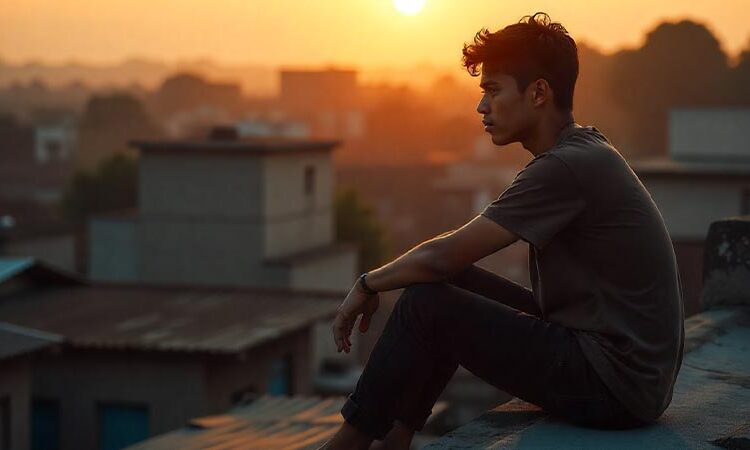
They don’t wear badges.
They don’t know they’re in it.
But they are — deeply, quietly, generationally.
Across villages and cities, in crowded streets and quiet corners, there exists a group I call the Poor Club. Not because they chose it. Not because they deserve it. But because life — or systems — or history — placed them there.
This is not a club of lazy people. It’s a club of the stuck, the surviving, the unheard.
⸻
Who Are They, Really?
They’re everywhere. The young man with a degree but no job. The woman who works two shifts and still counts coins for rice. The father who had to pull his daughter out of school to feed the rest.
They don’t post on LinkedIn.
They don’t dream of unicorn startups.
They dream of school fees, rent, medicine, food on the table.
You pass by them every day. Maybe you’ve been one of them. Maybe you still are.
⸻
How They Think — And Why That Matters
Here’s the thing most people don’t talk about: poverty is not just about money. It’s also a mindset shaped by constant pressure.
When every day is about survival:
• Long-term goals sound like fairy tales.
• Risks feel dangerous, not exciting.
• Trust? Rare. Systems have failed too many times.
They’re not negative people. They’re exhausted. And in that exhaustion, dreams shrink. Confidence fades. The world starts to feel like a party they’re not invited to.
⸻
How They Live
No fancy routines. No time for podcasts or journaling. Life in the Poor Club is about getting through the day — one problem at a time.
They wake up early, not to hit the gym, but to catch the first shift. They stand in long lines for gas or water. Meals are simple — sometimes skipped. Plans are made day-by-day, because thinking further feels like a luxury they can’t afford.
Entertainment? Maybe a local TV channel or chatting with neighbours on a rooftop. Joy exists here — but it’s often quiet, fragile, and fleeting.
It’s not that they don’t work hard. It’s that they work hard… and still stay in the same place.
⸻
Love, Family, and Struggle
Relationships in the Poor Club are raw — shaped by pressure, held together by hope.
Love happens. But it’s often rushed — early marriages, unplanned children, promises made under economic pressure.
A lot of fights aren’t about feelings. They’re about bills, food, or the future. Silence replaces romance when life gets heavy.
Children become helpers, not just learners. A teenage boy might be asked to quit school. A girl might be married off young — not because her family doesn’t love her, but because they can’t afford anything else.
There is care. There is laughter. But there is also stress that never quite leaves the room.
Why They Stay Poor
Here’s the truth most people ignore: escaping poverty is not just about trying harder. It’s about having the chance to try at all.
You can’t save money when you barely earn enough to eat.
You can’t take a better job if you can’t afford the bus fare to get there.
You can’t study for a promotion when your lights go out every evening.
One setback — a hospital bill, a broken rickshaw, a missed rent payment — can destroy months of effort. And when you grow up watching your parents struggle, it’s easy to believe that suffering is just part of life.
This is how poverty stays alive. Not because people want it — but because it keeps resetting the game every time someone starts to play.
⸻
So What Now?
This article isn’t about pity. It’s about awareness.
You can’t fix what you don’t understand.
If we want fewer people in this club, we need more than charity:
• We need education that actually opens doors.
• We need systems that work for the bottom, not just the top.
• We need to stop judging the poor by the wealth they don’t have — and start building a world where escaping poverty isn’t a miracle, but a path.
⸻
Final Words
The Poor Club doesn’t send invitations.
No one chooses to join — they’re born into it, pushed into it, or trapped without realizing it.
And while it may feel invisible to some, it’s everywhere: behind the counter, on the street corner, in the forgotten alleyways of our cities. These people aren’t lazy. They aren’t broken. They’re simply carrying more than most, with less than they need.
If we really want change, we have to stop judging and start understanding.
Because poverty isn’t just about money — it’s about blocked paths, silent dreams, and systems that look the other way.
The goal isn’t sympathy.
The goal is dignity.
And the question we should all ask is this:
What would the world look like if fewer people belonged to this club?